Showing posts with label nuclear energy. Show all posts

Saturday, February 20, 2010

A NUCLEAR ENERGY UPDATE

United States Secretary of Energy Steven Chu and President Obama announced this week funding for the construction of a new nuclear power plant in Georgia.  This facility will be the first nuclear power plant in the United States to be built in thirty years!
Environmental activists do not often support nuclear energy, but this plan may be a step in the right direction—a direction away from fossil fuels.  Remember that nuclear energy results in no carbon emissions!  This new power plant will cut carbon pollution by 16 million tons each year when compared to a coal-fired power plant.

However, the one major problem still to be solved with this type of power is how to get rid of nuclear waste.   President Obama says we must “accelerate our efforts to find ways of storing this waste safely and disposing of it.”  Secretary Chu has said that he is “convinced that the nuclear waste issue is solvable” and has talked about ways that nuclear waste can someday be recycled.

More information on Nobel-prize winning Energy Secretary Steven Chu to follow!

Sunday, January 31, 2010

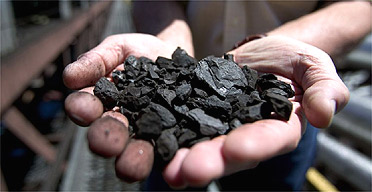
WHAT IS CLEAN COAL?

According to the United Nations Panel on Climate Change, the burning of coal is a major contributor to global warming.  In response to this, coal companies have started advertising “clean coal” technology.  But what is it?  And is it a good energy source for the future?

Clean coal technology can mean several different things, but the most common definition is that instead of releasing CO2 into the air after burning coal, the carbon dioxide is stored underground.

ADVANTAGES
·      Carbon dioxide is not immediately released into the atmosphere.
·      Supplies of coal are available to us now.
DISADVANTAGES
·      Carbon dioxide that is “hidden” could possibly leak into the atmosphere anyway or into our ground water, unless it is closely monitored!
·      Major environmental problems result from mining the coal in the first place.
·      Pollutants still exist, but just released in a different way.

This sounds like a similar problem I talked about with nuclear technology.  The poisonous remnants of creating the energy still exist, we just hide them in a place that seems to be less harmful (for the time being.)  Sounds like another temporary solution to a much bigger problem!

Did you know that last year, private companies spent 35 million dollars advertising “clean coal” technology?  If there really is no way to get clean energy from the burning of coal, then why is so much money being spent advertising a myth?  Does it make us feel better if we think burning coal is clean? 


Did you know that the United States only has enough coal reserves to last us for the next 200 years?  If coal is another limited resource, why spend so much money pretending to make it clean instead of investing in new technology that is actually clean?

Friday, January 29, 2010

NUCLEAR POWER - PROS AND CONS


Scientists have attributed global warming to the burning of fossil fuels.  One energy technology that does NOT emit greenhouse gases is nuclear power.

Last week, I went on a tour of the Science and Nature Center at a Nuclear Power Plant with my dad.  Here is some information about the advantages and disadvantages of nuclear power!

ABOVE:  A TYPICAL NUCLEAR REACTOR COOLING TOWER

ADVANTAGES:
·      Does not add to the greenhouse effect (no smoke or carbon dioxide!)
·      Just a small amount of fuel can produce a very large amount of energy.  (One ton of Uranium produces more energy than is produced by several MILLION tons of coal or barrels of oil!)
·      Produces small amounts of waste.
·      Nuclear power plants don’t require as much space as other types of facilities.

DISADVANTAGES:
·      The small amount of waste that is produced is VERY, VERY dangerous.
·      Nuclear waste must be hidden away for many thousands of years so that the radioactivity can die away.
·      Nuclear waste that is buried may be affected or released by floods, earthquakes or deliberate attacks.
·      An accident at a nuclear power plant can be a MAJOR disaster!  Radioactivity can kill people and animals or cause cancer.
·      Nuclear energy comes from Uranium and Uranium is NOT renewable.  Just like coal and oil, we will run out of it someday!

Although nuclear energy is delicate and has caused problems in the past, a modern nuclear power plant can produce power without releasing toxins into the environment (if everything goes right.)  Energy produced by coal and oil cannot do the same.

Is nuclear energy the next step away from dirty energy sources before we can harness the power of sun, wind and water more efficiently?  What do you think?  Do the advantages outweigh the disadvantages?  What else do you know about nuclear power?
ABOVE:  THE NUCLEAR POWER PLANT I VISITED AT SEABROOK STATION IN NEW HAMPSHIRE.

Thursday, January 28, 2010

STATE OF THE UNION ADDRESS

Two days ago, President Barack Obama made his first state of the union address.  Of course, I was excited to hear him talk about his plans for helping our country “go green!”

The President talked about creating “clean energy jobs” (cool!) and passing a “comprehensive energy and climate bill” (very cool!)  He then talked about the importance of “clean nuclear power plants,” “oil and gas development,” “advanced biofuels” and “clean coal technologies.”

What is all that stuff?  None of it sounds very green to me!  Mr. Obama didn’t talk about solar, wind or geothermal power—the cleanest known energy technologies of today!

For the next few days, I will try to research the energy sources he did mention and provide information about each of them!  First up—nuclear energy!

Labels

"Earth Hour" (1) acid rain (1) Amazon (1) animals (1) Arbor Day (1) Asia (1) Barack Obama (2) biodegradability (1) biodiesel (1) biodiversity (1) bioethanol (1) biofuels (3) birds (1) books (1) canvas bags (2) carbon dioxide (1) carbon emissions (1) carbon neutral (1) China (1) clean coal (2) clean energy (2) climate bill (1) climate change (5) CO2 (2) coal (1) compost (1) cooking grease (1) corn (1) Crested Ibis (1) decompose (1) decomposition (1) Deepwater Horizon (2) deforestation (2) dinosaurs (1) disposable (1) dolphins (1) Earth Day (2) Ecuador (1) environment (7) experiment (1) extinction (2) fish (2) food chain (1) fossil fuels (4) freshwater (1) gas (3) global warming (7) go green (1) Great Pacific Garbage Patch (1) greenhouse effect (1) greenhouse gases (5) Greenpeace (1) groundwater (1) habitat (1) Japan (1) landfill (5) limited resource (1) marine life (1) mining (1) mushrooms (1) mycelium (1) natural resources (1) nontoxic (1) North Pacific Gyre (1) nuclear energy (4) oceans (1) oil (6) oil spill (1) organic farm (1) overfishing (1) Pacific Trash Vortex (1) paper (1) Paul Hawken (1) plastic (3) plastic bags (2) pollute; poetry; people; family (1) pollution (4) radioactivity (1) recycle (1) recycling (8) recycling symbols (1) reduce (1) renewable resources (1) reusable (2) reuse (2) runoff (1) salt (1) sea life (1) seals (1) sodium chloride (1) South America (1) spills (1) Steven Chu (1) Styrofoam (2) sugar cane (1) sustainability (1) trees (2) Uranium (1) waste (5) water (5) water conservation (4) water pollution (1) wildlife (1) World Wildlife Fund (1)